
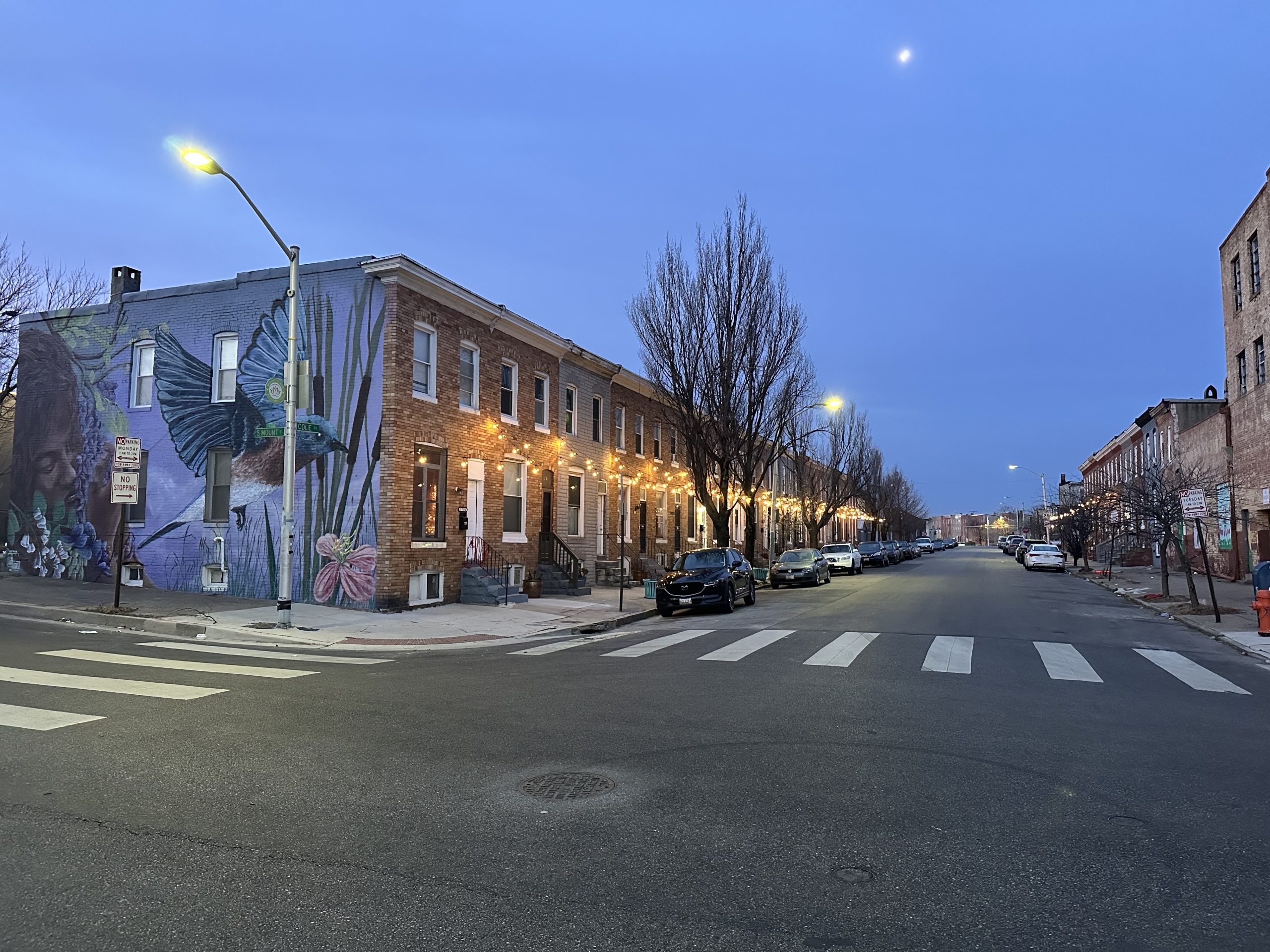
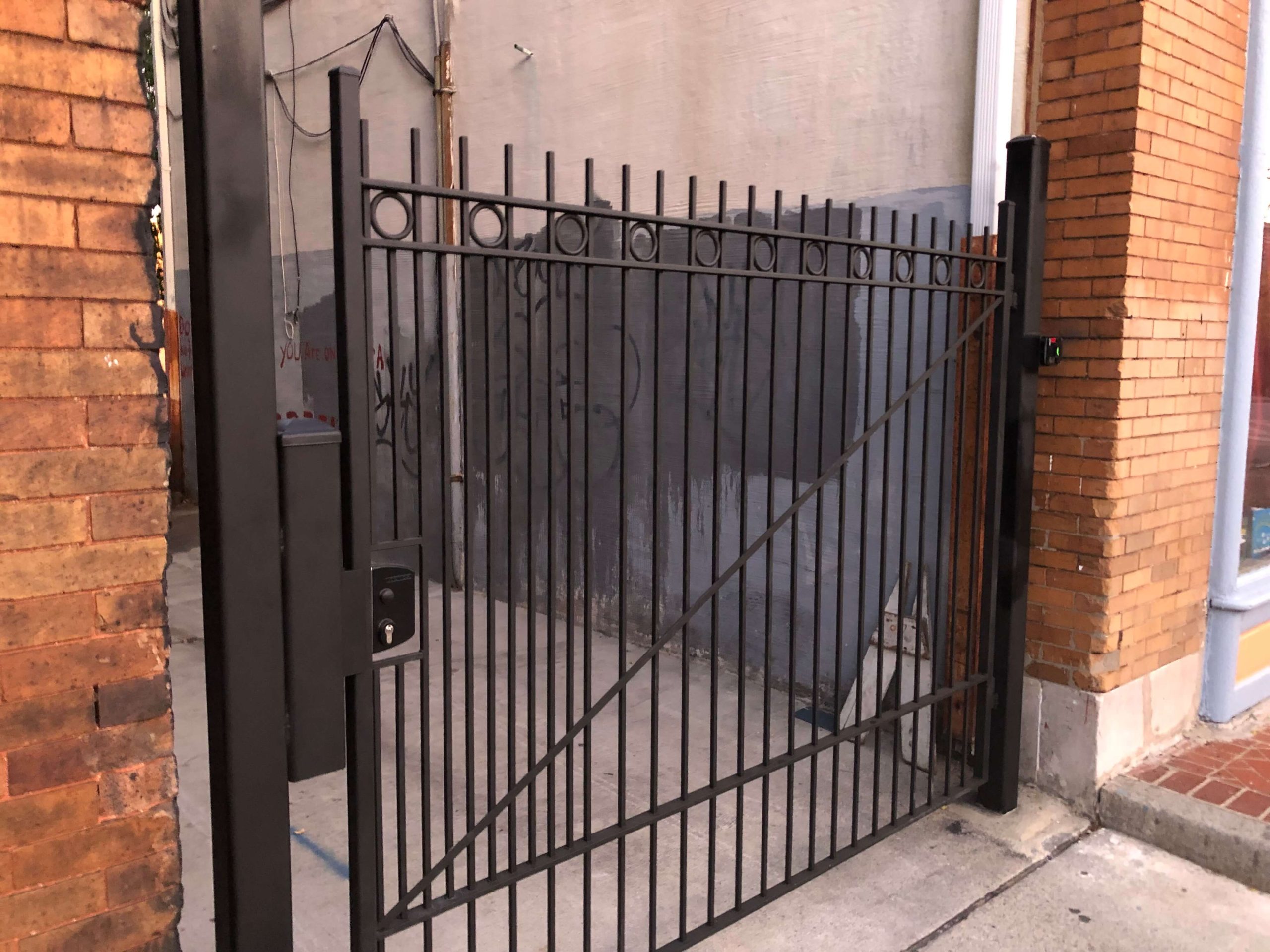
Improving the real and perceived safety of the area is a key goal of our Vision Plan — we envision communities where all community members are and feel safe on our streets and in our public spaces. Alley gating is a strategy that allows residents and business owners to take control of seldom used alleys and footpaths abutting their homes and businesses.
Gating little used alleys and footpaths reduces dumping, allows residents to secure the back entrances to their homes, and potentially beautifies and transforms the alley into a usable community space.
The City has an extensive process to approve gating alleys and footpaths. In order for an alley to be gated, 75% of the owners of the abutting non-vacant properties need to agree, and there needs to be a public hearing. Gates have lock boxes for City services, emergency services, and BGE so that the alley can be accessed when needed, and neighboring residents all receive their own key.
Gates are constructed and installed by community members, and the alley gating program is funded by the State of Maryland Department of Housing and Community Development.
How It Works
75% of owners of abutting non-vacant properties must agree before an alley can be gated.
A public hearing is required as part of the City's approval process.
Gates include lock boxes for City services, emergency services, and BGE — and all neighboring residents receive their own key.
Funded by the State of Maryland Department of Housing and Community Development.
Thanks to support from the State of Maryland Department of Housing and Community Development's Community Safety Works grant program, SWP provided funding to community members who want to install string lighting along their blocks.
The SWP funds materials and installation costs. Solar lights work best on south and east facing blocks that get good light. LED string lights are a great alternative — electrical costs are very low (typically no more than $5/month to power a whole block).
The SWP cannot provide technical assistance on installation but is happy to connect blocks with contacts in the City who have done similar work.
- Written permission from each property owner whose property will have string lighting installed on it
- A written commitment to paying for ongoing electricity costs from the resident(s) responsible
- A petition expressing support for the installation from block residents
- Installation plan including a sketch and contact information of the installer
- Budget including material and installation costs with supporting quotes
Ready to Apply?
Download the application and submit by email, mail, or drop off at 1317 W Baltimore St.
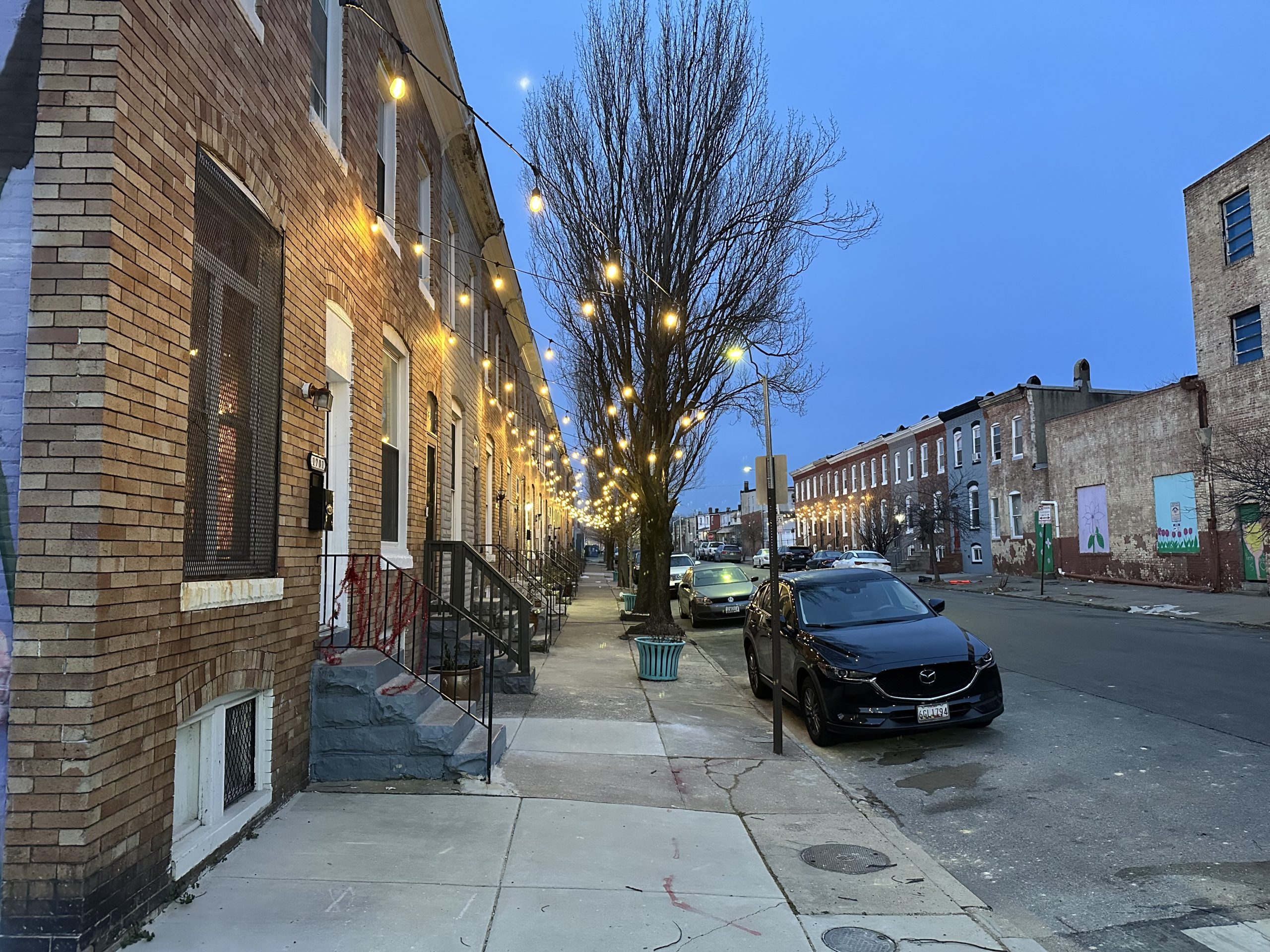
Solar or LED cafe/string lights. Solar lights work best on south and east facing blocks that get good light. LED lights are a great option when solar won't work — electrical costs are very low.
It will increase the bill of whoever has the lights plugged in, but LED electrical costs are very low. Blocks can share costs, plug into multiple homes, or have one neighbor cover it. SWP funding cannot cover ongoing utility costs.
Research shows increased lighting reduces crime and makes residents feel safer. Lights also facilitate block parties and socializing — and the planning process itself strengthens neighbor connections.
Depends on the size of your block. A 96-foot strand will generally cover 3–4 houses. Measure your block and create a plan to estimate how many strands you need.
Estimates range from $85–$100 per house. Lights can be found at Home Depot, Amazon, Lowe's, or Ace Hardware. Figure out your installation costs separately — will you pay someone? Do they need special equipment?
Renters are eligible to apply. You'll need written permission from the property owner to attach anything to the home. Contact us if you have questions.
Contact us at meghan@swpbal.org and we'll figure out a plan.
Talk to us! Contact Meghan at meghan@swpbal.org. We may not be able to support another type of lighting with current grant funding, but we're happy to discuss ideas.
